Roofing Plants That Never Fully Shut Down
Lincoln's manufacturing base runs from powersports and rail equipment production to metal fabrication and turf equipment plants, and most of these buildings combine large low-slope roof fields with process exhaust, crane bays, and equipment that has to keep running through a roofing project. A plant roof gets scoped around production, not the other way around.
Process Exhaust and Roof Penetrations
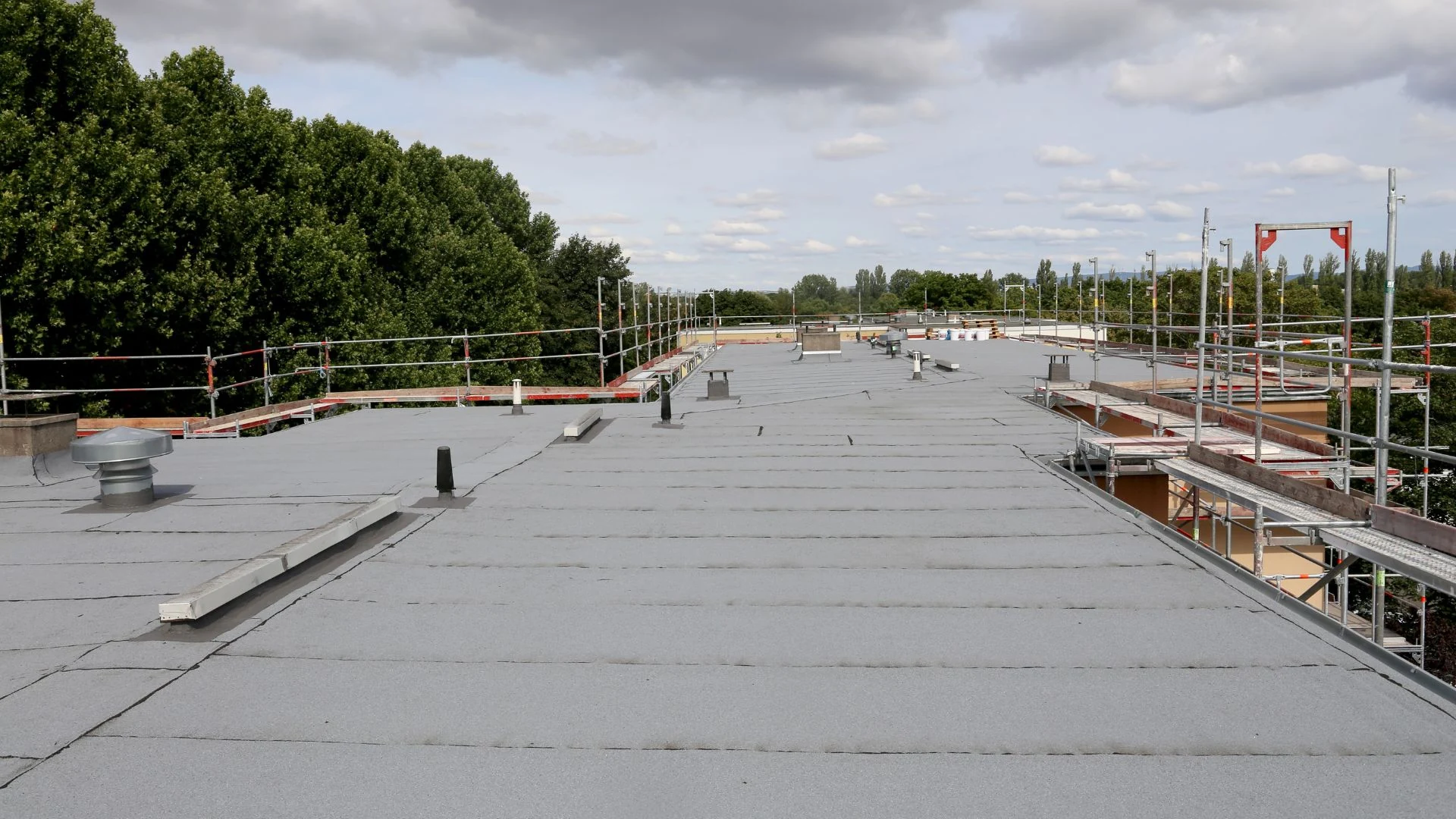
Manufacturing roofs carry more penetrations per square foot than a typical commercial building, from paint booth exhaust to welding fume extraction to compressed air and utility runs crossing the field. Every one of those penetrations is a potential leak point, and we inspect them individually rather than as a general field survey, because a failed flashing at a process exhaust curb can mean production downtime, not only a maintenance ticket.
We keep a running log of penetration locations and condition for plants with a lot of rooftop process equipment, since that history helps a facilities team track which curbs have needed repeat attention and which have stayed sound for years. That log becomes useful during budget planning too, letting a plant prioritize the penetrations most likely to need work in the coming year instead of treating every curb as an equal risk.
Crane Bay and High-Bay Roof Sections
Plants with overhead crane bays often have taller, structurally distinct roof sections compared to the adjoining office or warehouse portions of the same building, and those sections see different wind and thermal movement. We treat crane bay roofing as its own scope item with its own drainage and fastening review rather than folding it into a blanket estimate for the whole facility.
Coatings and Recover Options for Continuous-Shift Buildings
A plant running multiple shifts doesn't have a convenient dark period for roof work, so recover and coating options that minimize disruption often make more sense than a full tear-off unless the deck or insulation is genuinely failing. Silicone and acrylic coating systems can extend membrane life on a roof that's structurally sound but weathered, buying time without shutting down a production line for an extended reroof.
We're direct about where a coating won't hold, which happens when the underlying membrane has open seams or when wet insulation is already trapped below the surface. Coating over a roof that needs a real repair first just delays the failure and adds cost without solving the underlying problem, so we test moisture content before recommending a coating system on any older plant roof.
Insulation and Reflectivity on Buildings With Internal Heat Sources
Manufacturing floors generate their own heat from equipment and process work, which changes the reflectivity and insulation calculation compared to a standard office building. A reflective roof still reduces external heat gain during summer, but the insulation decision also has to account for how much heat the building is already managing internally, and we evaluate both sides before recommending a spec.
- Individual inspection of process exhaust and utility penetrations
- Separate scoping for crane bay and high-bay roof sections
- Coating and recover options for continuous-shift facilities
- Insulation review accounting for internal process heat
- Wind uplift and fastening checks for exposed industrial park sites
- Post-hailstorm inspection prioritized around production schedules
Scheduling Work Around Shift Patterns
A plant running two or three shifts has limited quiet windows, and we build the work schedule around whatever downtime the facility can actually offer rather than assuming a standard business-hours project. That sometimes means weekend work, sometimes a planned production line shutdown coordinated well in advance, and sometimes phased work timed to a slower shift.
Hail and Wind Exposure on Industrial Park Sites
Manufacturing sites on the edges of town tend to sit in more open, exposed locations than downtown buildings, which puts more stress on roof edges during Nebraska's spring wind and hail events. We check fastening pattern and perimeter securement against the specific exposure of each site, and we prioritize post-storm inspection for plants where a leak would affect active production.
Powersports, rail, and turf equipment manufacturing here often run product lines with tight tolerance for dust or debris intrusion, which raises the bar for how carefully we contain a roof project above an active production floor. We coordinate containment measures with plant safety staff before work begins on any roof section directly over a sensitive assembly line.
Questions Plant and Facilities Managers Ask Us
Can you inspect roof penetrations without stopping production?
Most inspection work doesn't require shutting down equipment. Repairs at active exhaust or utility curbs get scheduled around your production windows in coordination with your facilities team.
Is a coating a real option for our aging plant roof, or just a delay?
It depends on the underlying deck and insulation condition. If the structure is sound and the membrane is weathered but intact, a coating can extend service life meaningfully. If there's wet insulation or deck damage, we'll say so rather than recommend a coating that won't hold.
How do you handle roofing over an active crane bay?
We scope crane bay sections separately, checking drainage and fastening specific to that structure, and coordinate access timing with your crane operations schedule.
Can work happen around our shift schedule?
Yes. We plan around whatever downtime window your facility can offer, whether that's a weekend, a slower shift, or a planned partial shutdown.
How fast can you respond if a leak threatens equipment or product?
We prioritize inspection and temporary protection for leaks affecting production or inventory ahead of routine maintenance calls.