EPDM Rubber Roofs for Lincoln's Wide Temperature Swings
EPDM has been installed on Nebraska commercial buildings for decades, and it earns its place mostly on one strength: the rubber membrane stays flexible across a temperature range that would stress a more rigid material, which describes almost every winter-to-summer cycle Lincoln goes through.
Why Flexibility Matters Here
A roof membrane never really sits still. It expands as the deck heats in summer sun and contracts as temperatures drop below zero in a January cold snap, and it moves on that cycle every day the sun is out, seasonally and daily both. EPDM's synthetic rubber formulation handles that daily and seasonal movement without the cracking or seam splitting that stiffer membranes can develop after repeated cycling.
On buildings where the roof deck itself moves slightly, whether from an older wood deck or a steel deck with some deflection, EPDM's elasticity absorbs that movement better than a membrane with less give. That's a real consideration on some of the older manufacturing and warehouse buildings we work on around the edges of the city.
Lincoln's winters bring stretches of subzero wind chill followed by sudden warm-ups, sometimes within the same week, and that freeze-thaw whiplash is harder on a roof than a steady cold winter would be. EPDM's rubber compound was engineered for exactly this kind of repeated cycling, which is part of why it has stayed a standard choice through decades of Nebraska roofing.
Dark Surface, Different Trade-Off
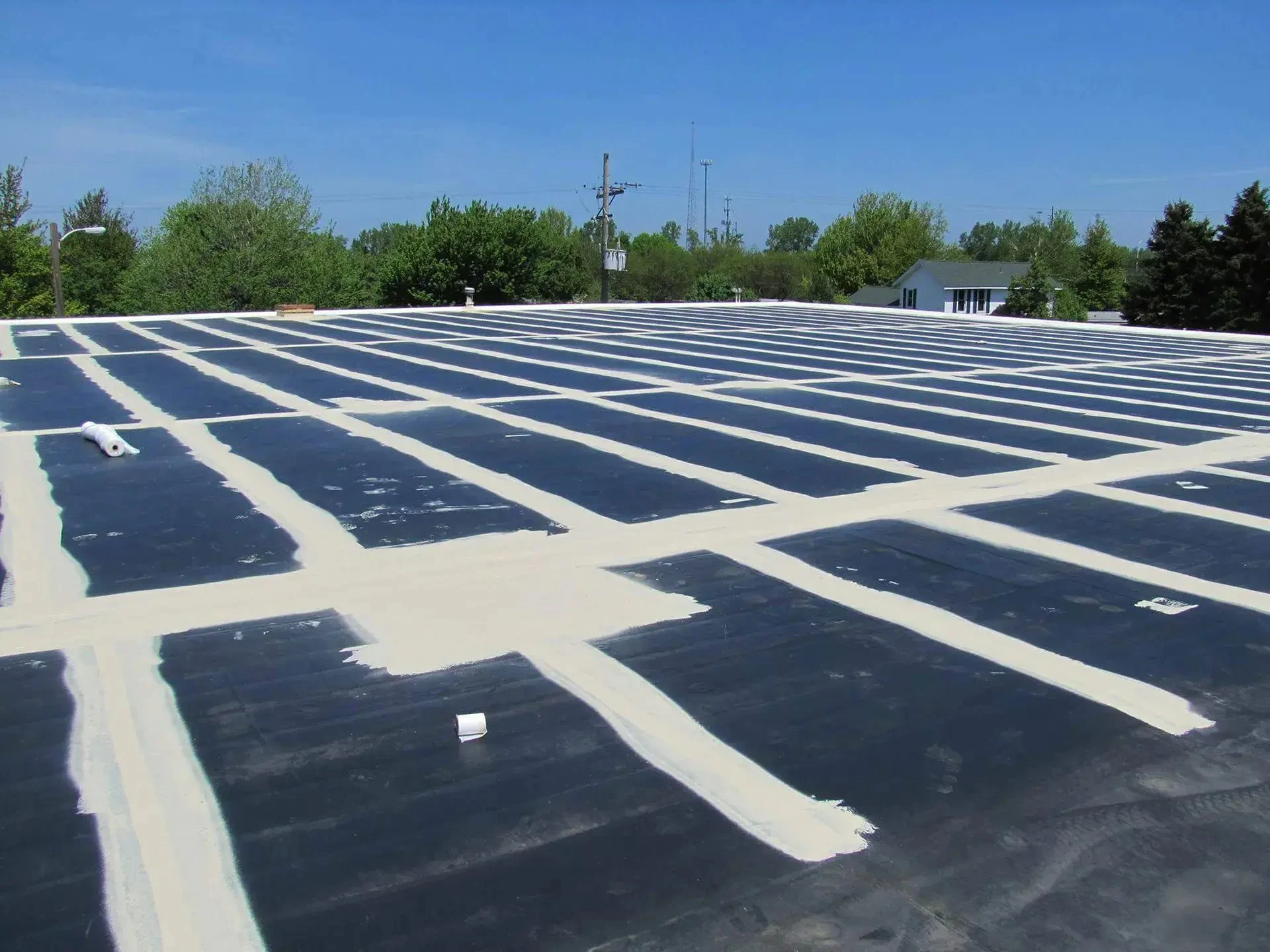
Standard EPDM is black, which absorbs heat rather than reflecting it. On a building with strong insulation and a roof that isn't driving cooling costs, that's a minor factor. On a poorly insulated older building, or one with rooftop units already working hard through a Nebraska summer, the dark surface adds to the load. We're upfront about this trade-off, and white EPDM is available where reflectivity outweighs the cost premium.
In practice, we see EPDM specified most where budget and long-term flexibility matter more than surface color, particularly on buildings that already have adequate insulation doing the thermal work.
Installation Methods
We install EPDM three ways depending on the building:
- Ballasted, with river rock or paver ballast holding the membrane in place
- Mechanically fastened, with seams and perimeter secured by fasteners under the seam tape
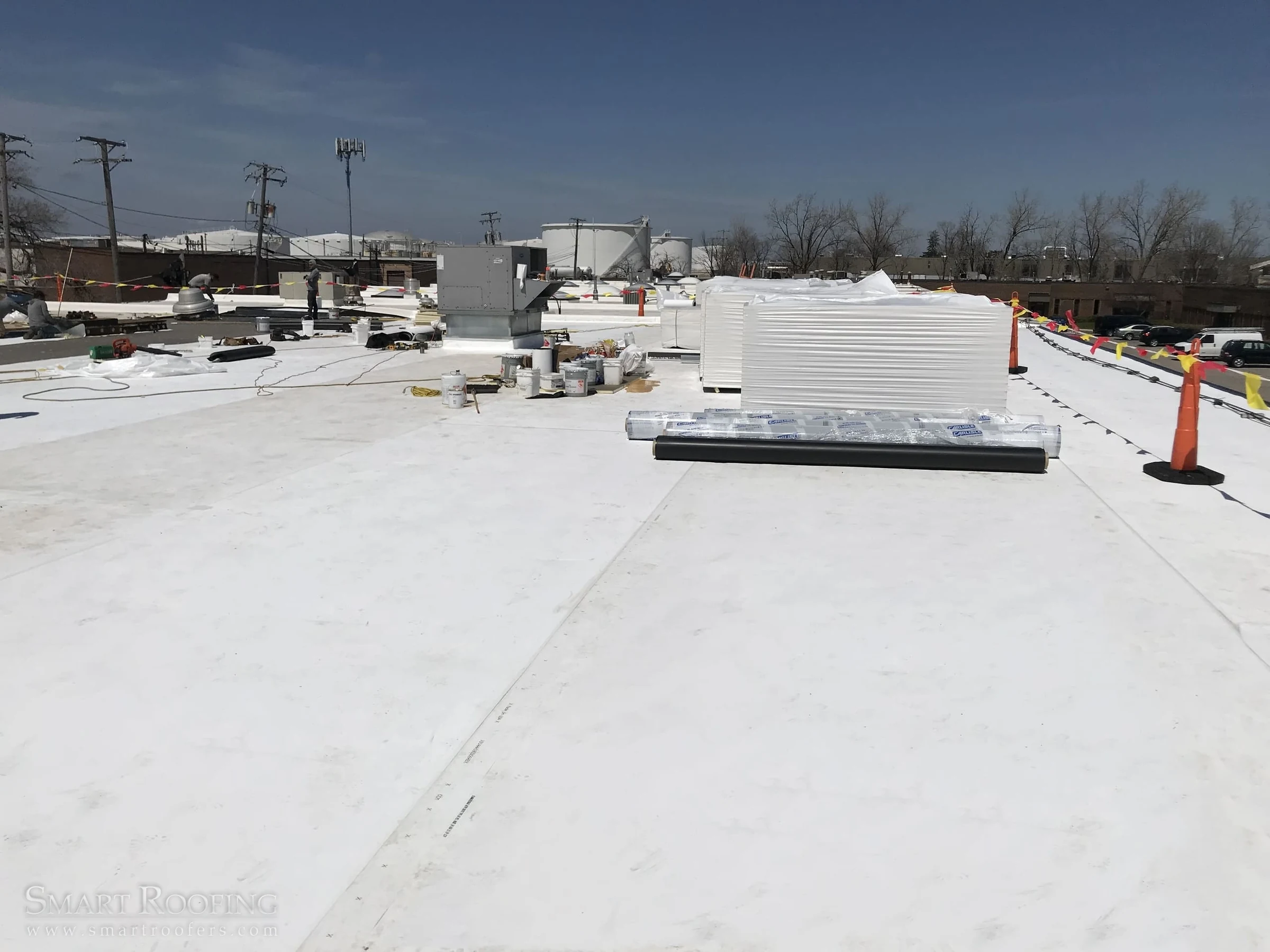
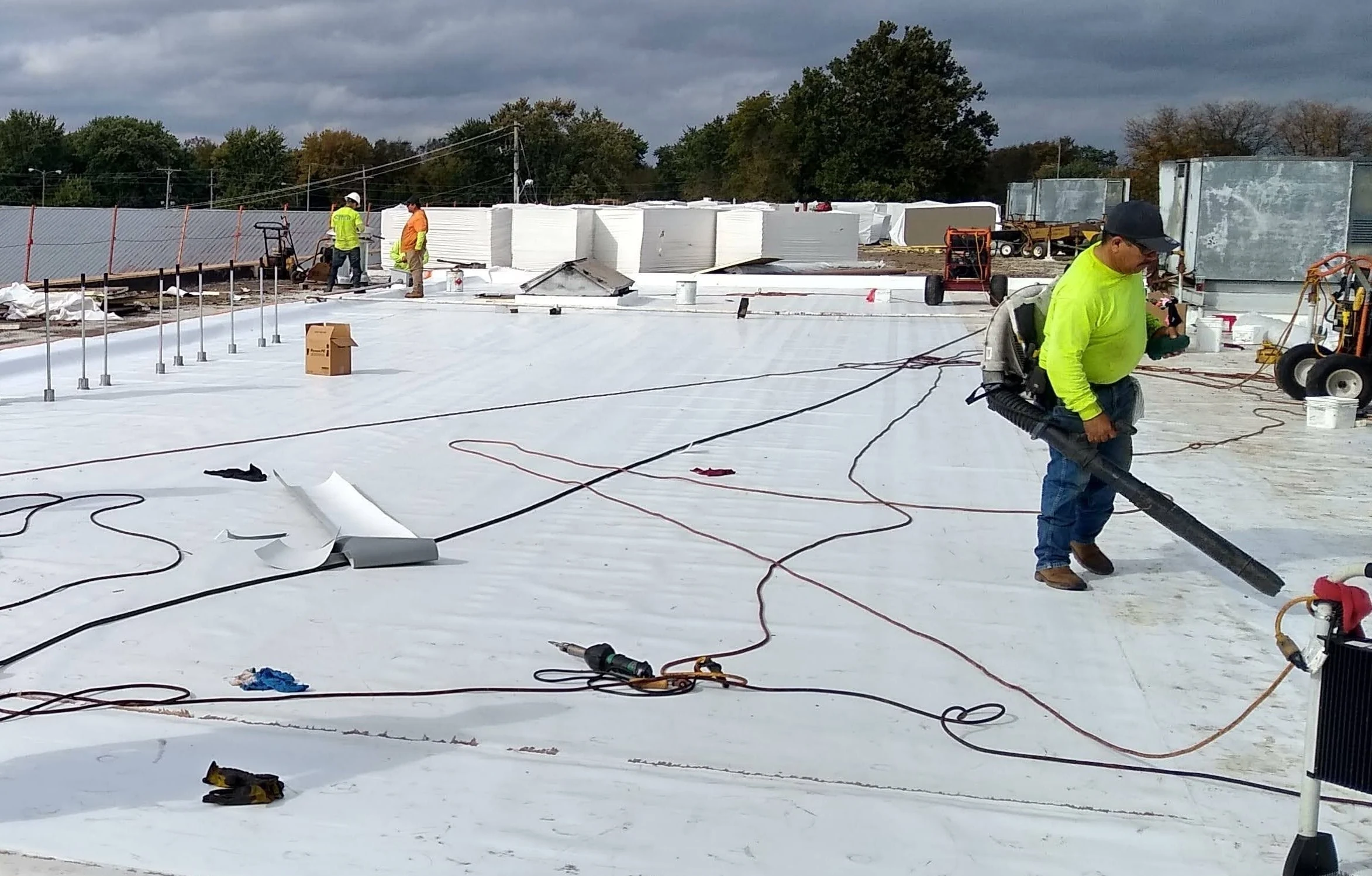
- Fully adhered, bonded directly to the insulation board for a cleaner, lower-profile finish
- Induction-welded, with fastening plates bonded to the underside of the membrane for fewer surface penetrations
Ballasted systems are common on large, low-slope warehouse and distribution roofs where the added weight isn't a structural concern and where budget favors a simpler install. Fully adhered systems show up more on buildings where roof weight is limited or where a cleaner finish matters, such as visible rooftop areas near office entrances. Induction-welded systems split the difference, giving strong wind uplift resistance without the added dead load of ballast, which we specify on some of the taller office buildings around downtown where roof weight limits are stricter.
Where We See EPDM in Lincoln
EPDM shows up most on manufacturing buildings, older distribution warehouses, and some university support buildings where the roof has been reballasted or reseamed multiple times over its life rather than replaced outright. It's a dependable, well-understood system for owners who want predictable performance without chasing the newest membrane technology.
We also see plenty of EPDM on buildings that switched from built-up roofing decades ago, when EPDM was the newer, lighter-weight alternative to gravel-surfaced systems. Those roofs have often been maintained and reseamed several times since, and property managers who know the system well tend to stick with it at replacement time rather than switching to something unfamiliar.
Seams and Long-Term Maintenance
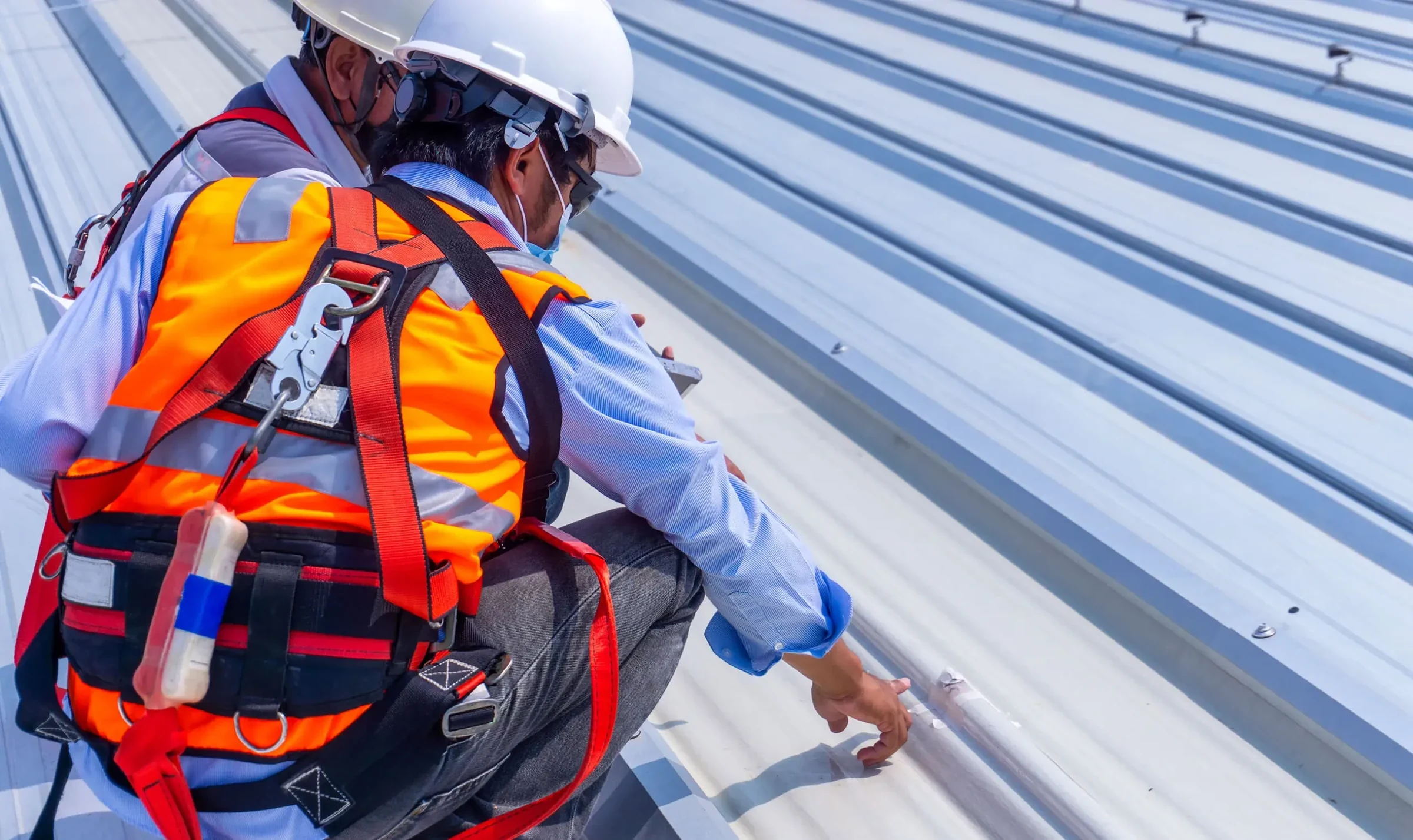
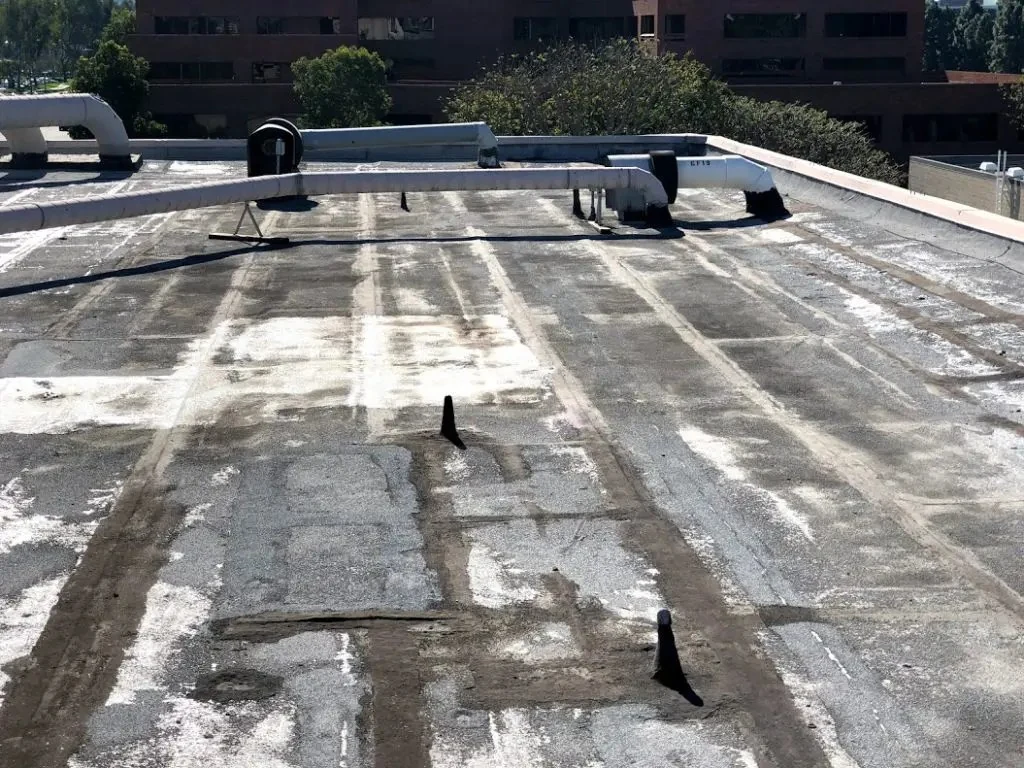
EPDM's historical weak point has been seam adhesive failure, particularly at older installations that used liquid adhesive rather than modern seam tape. We inspect seams as part of any EPDM maintenance visit, since a lifted seam is usually the first sign of trouble long before a leak shows up inside the building. Ballast systems also need periodic checks to confirm rock hasn't shifted away from drains or scuppers after wind events.
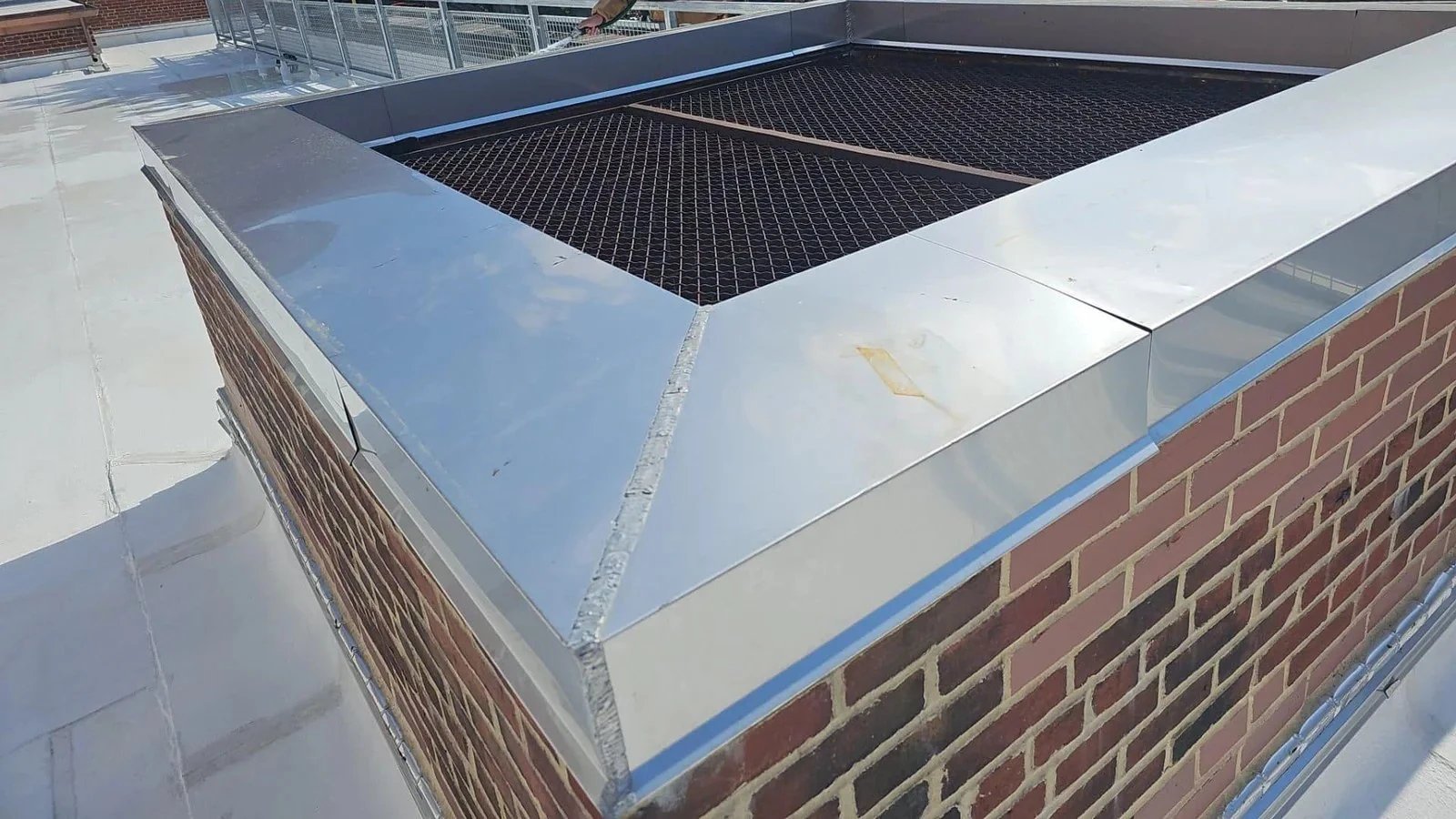
We also check flashing at parapet walls and rooftop penetrations during every EPDM maintenance visit, since those transition points, not the open field membrane, are where the vast majority of leaks on an EPDM roof actually originate over its service life.
Common Questions
Is EPDM a good fit for a roof with heavy hail exposure?
EPDM handles hail reasonably well because of its flexibility, though very large hail can still cause impact damage. We assess the specific roof's exposure and membrane thickness before recommending it over a stiffer alternative.
How does EPDM compare in cost to TPO?
EPDM is often priced competitively with TPO, with the real cost difference coming down to installation method, membrane thickness, and whether reflective white EPDM is specified.
Can an old EPDM roof be patched instead of replaced?
Often yes, if the membrane itself is still sound and the damage is limited to a seam or a localized puncture. We inspect before assuming replacement is the only option.
Does EPDM need gravel ballast to work?
No. Mechanically fastened and fully adhered EPDM systems don't require ballast and are common where roof weight or wind uplift is a bigger concern than budget.
How long does EPDM typically last on a Lincoln roof?
A well-installed EPDM system with proper seam maintenance regularly performs for two decades or more, particularly in ballasted applications where the membrane is protected from direct UV exposure.