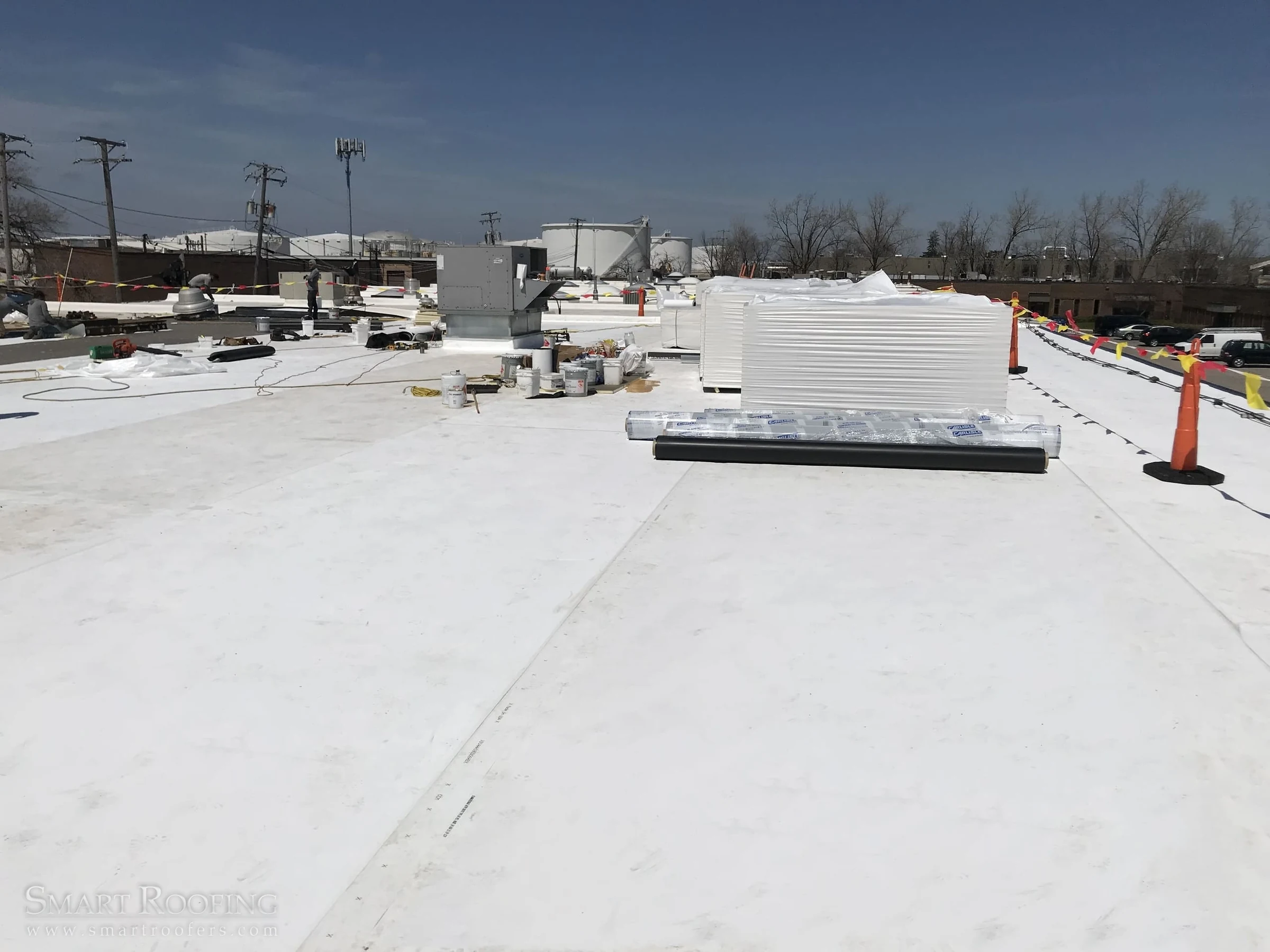
PVC Membrane for Roofs That Face Grease, Chemicals, or Heavy UV
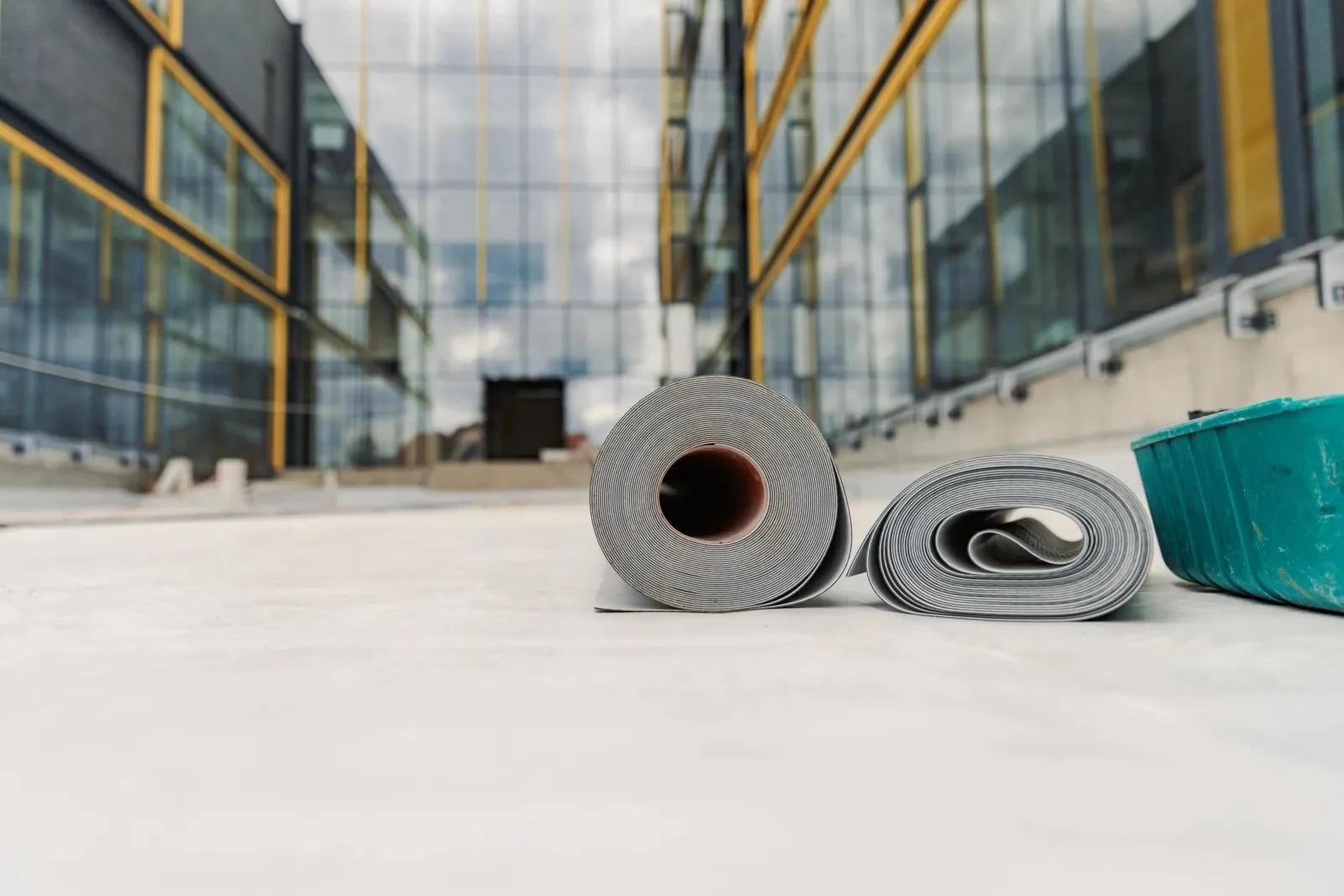
PVC single-ply membrane costs more than TPO or EPDM up front, and on the right building that cost is easy to justify. It resists oils, greases, and certain chemical exposure better than other single-ply options, which matters directly to some of Lincoln's manufacturing and food-adjacent facilities.
Chemical and Grease Resistance
Rooftop equipment on manufacturing buildings sometimes vents oils or process byproducts that settle on the roof surface over years. Kitchen exhaust on food-service and food-processing buildings does something similar with grease. TPO and EPDM membranes can degrade faster under sustained exposure to these substances, while PVC's chemical composition holds up considerably longer. We look closely at what's actually venting onto a roof, beyond what's specified in the building plans, before recommending a membrane.
This is one of the clearer cases where the extra material cost pays for itself in avoided premature replacement, rather than being a marginal upgrade. A membrane that fails early because it wasn't rated for the exposure it actually faces costs more over ten years than the PVC premium would have, even before accounting for the disruption of an early tear-off.
Reflectivity and Weld Strength
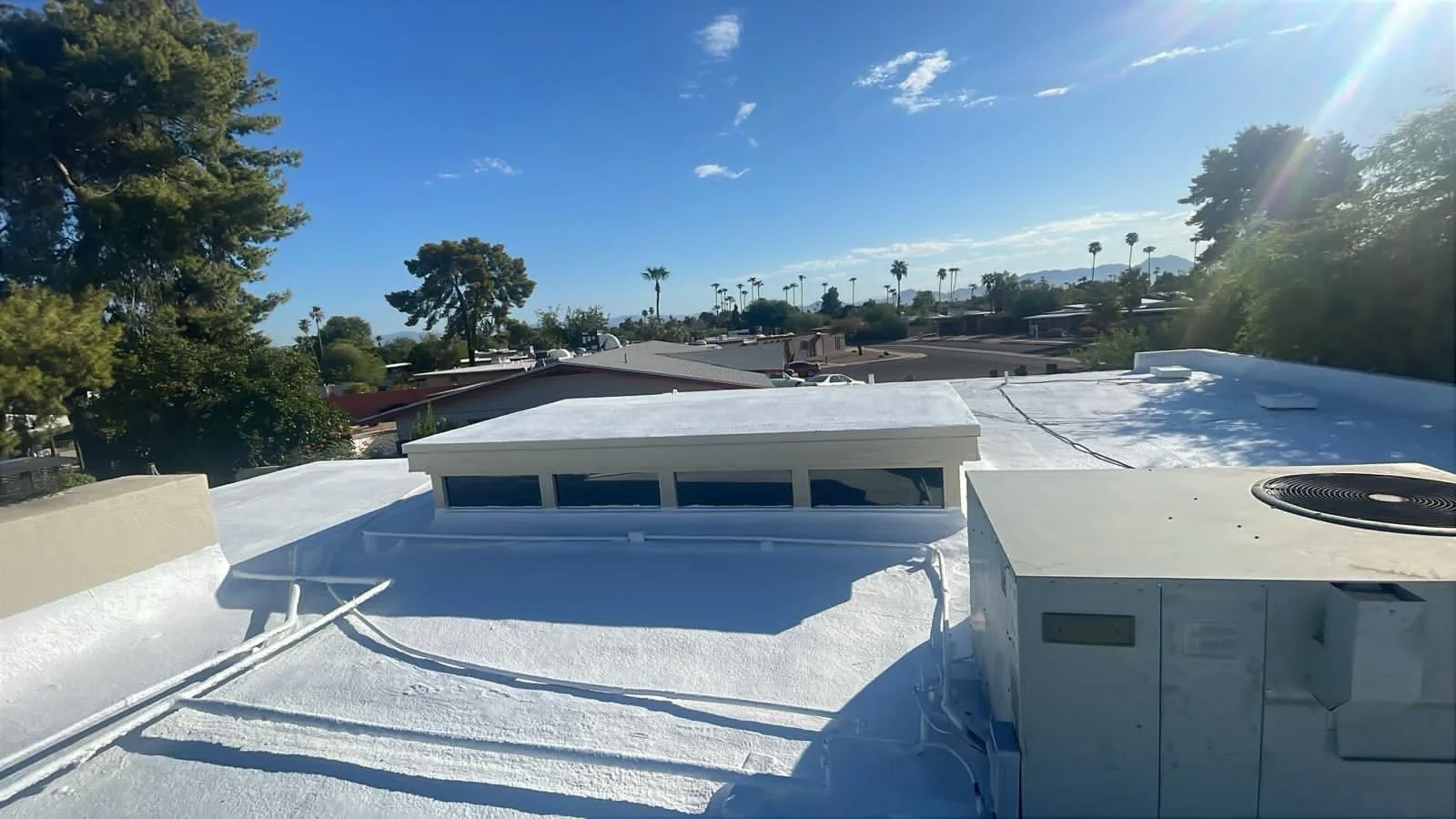
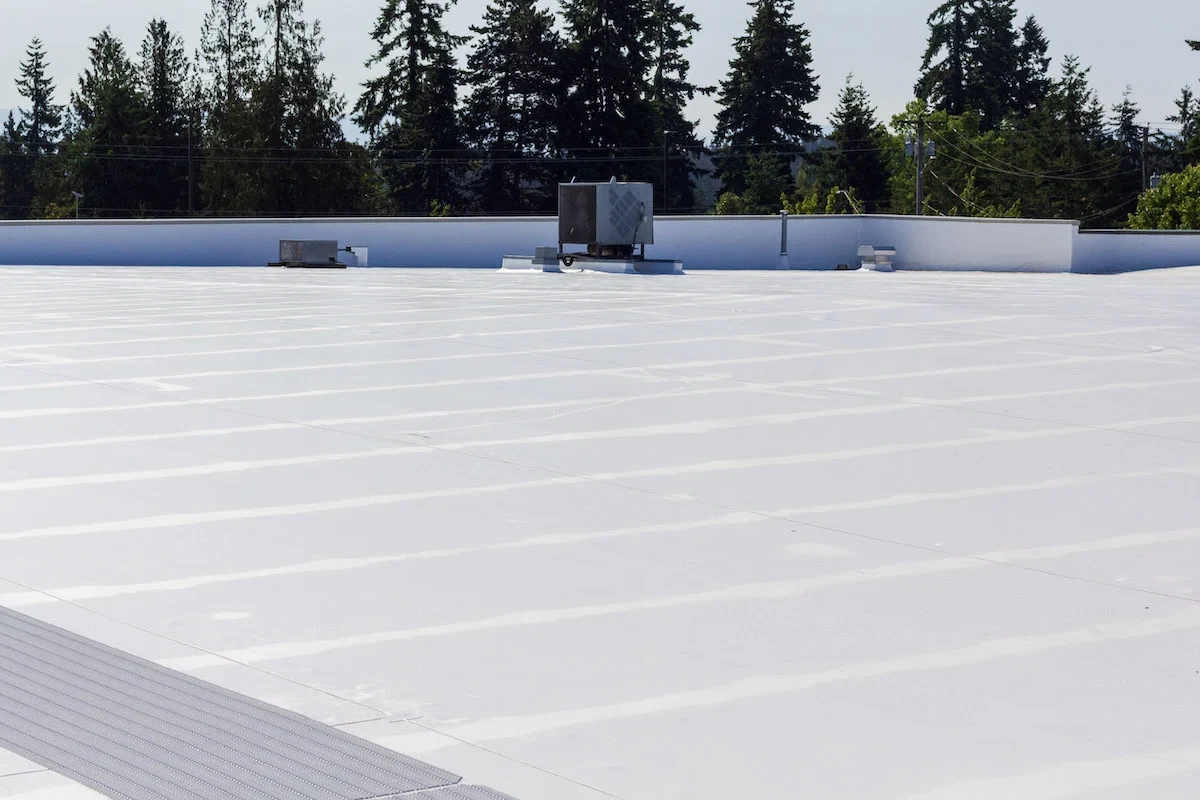
Like TPO, PVC is typically installed in a white or light color that reflects summer sun rather than absorbing it, helping control rooftop temperatures and indirectly reducing cooling load on the floor below. The seams are heat-welded, which produces a bond that's often stronger than the membrane material itself when tested, an advantage on roofs exposed to wind uplift during Lincoln's spring storm season.
PVC also tends to hold up well against ponding water, which matters on roofs with slight drainage issues or additional rooftop equipment that interrupts water flow toward drains.
Where PVC Makes Sense
- Manufacturing plants with rooftop exhaust or process venting
- Food-processing and food-service buildings
- Buildings with rooftop solar arrays, where PVC's puncture resistance and long service life pair well with the added weight and foot traffic
- Roofs with known ponding water areas
- Buildings where fire performance ratings are a specific design requirement
For a standard office building without unusual rooftop exposure, PVC's added cost often isn't necessary, and TPO delivers similar reflectivity for less.
Rooftop solar is becoming more common on Lincoln warehouse and distribution buildings looking to offset electricity costs, and PVC's puncture resistance handles the added foot traffic from panel installation and maintenance crews better than a thinner membrane would over the array's service life.
Installation Considerations
PVC is typically mechanically fastened or fully adhered, following the same deck and insulation evaluation we run for any single-ply system. We pay particular attention to compatibility between the PVC membrane and any adjacent materials, since PVC can react poorly with certain asphalt-based products if they come into direct contact during installation or later repair work.
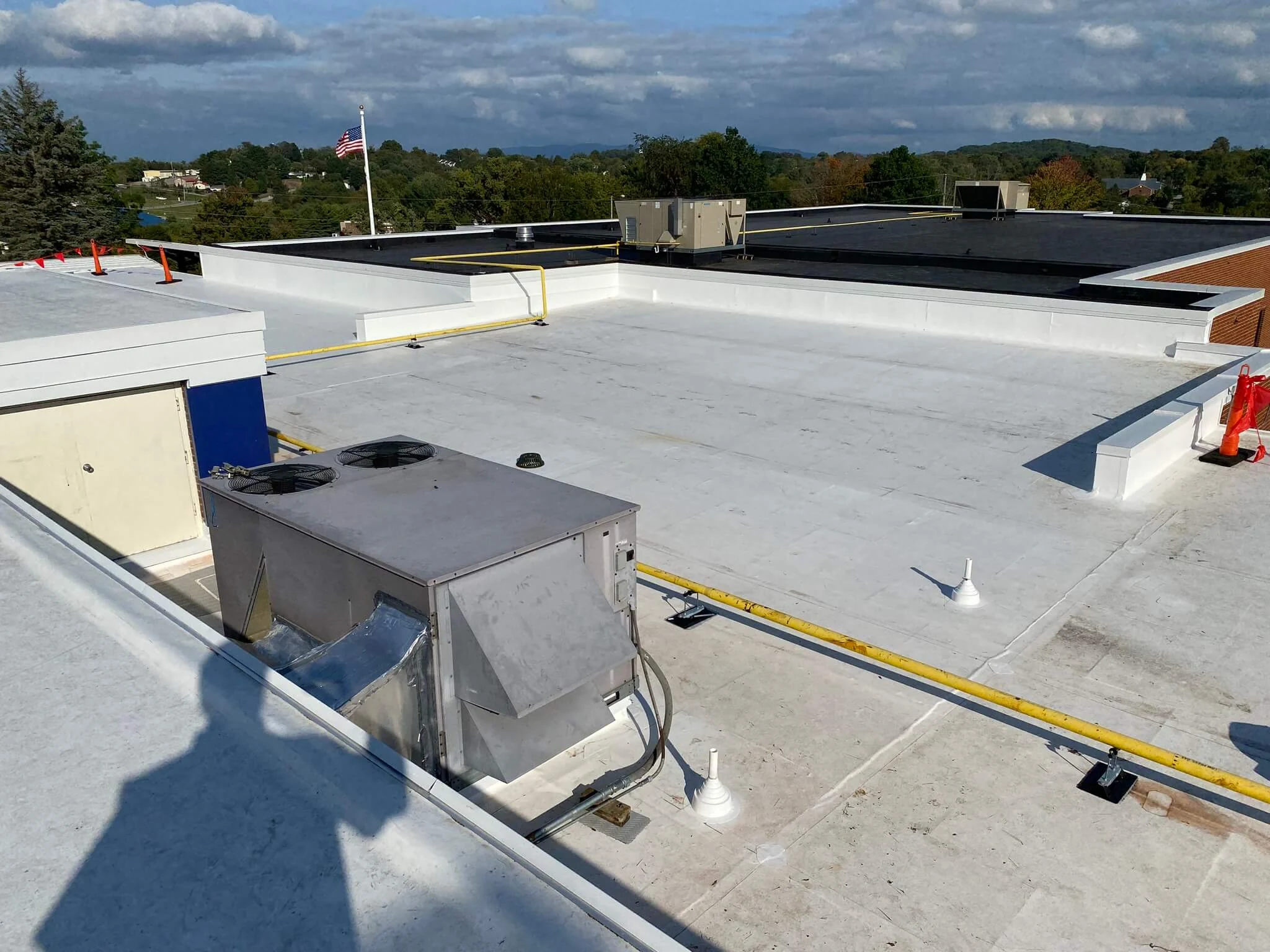
On buildings near manufacturing exhaust, we also plan flashing and penetration details around the equipment that's actually causing the exposure, beyond the standard roof penetrations shown on an as-built drawing.
Long-Term Performance in This Climate
PVC's stability across temperature extremes is a genuine advantage here. It doesn't become brittle in a hard Nebraska freeze the way some materials can, and it holds its reflectivity and seam integrity through repeated summer heat cycles better than membranes with less UV-stable formulations. For owners planning to hold a building for fifteen-plus years, that stability shows up as fewer mid-life repairs.
That matters most on manufacturing buildings that run rooftop exhaust year-round, since those roofs face the compounding stress of chemical exposure and Nebraska's full temperature range at the same time. A membrane that only handles one of those two stresses well tends to show its weak point within the first several years rather than holding up over a full service life.
We also see PVC specified on cold storage and refrigerated warehouse buildings, where the roof deck experiences an unusual temperature gradient between a heavily insulated interior and outside conditions. That gradient puts extra stress on membrane and flashing details, and PVC's dimensional stability handles it more predictably than some alternatives.
Common Questions
Is PVC worth the extra cost over TPO for a standard office building?
Usually not, unless the roof has specific exposure to chemicals, grease, or heavy rooftop equipment traffic. For a typical office, TPO delivers similar reflectivity at a lower cost.
Can PVC be installed directly over an existing asphalt-based roof?
Not without a separation layer, since PVC can react with asphalt-based materials over time. We address this in the recover plan rather than skipping the step.
Is PVC a good match for a building near manufacturing exhaust vents?
Yes, that's one of the clearest use cases for PVC. Its resistance to oils and process byproducts holds up better over time than TPO or EPDM in that specific exposure, which matters most on buildings where the exhaust runs continuously.
Does PVC hold up to Nebraska hail?
PVC performs comparably to TPO against hail when specified at adequate thickness with a proper cover board, though very large hail can still cause impact damage to any single-ply membrane.
How does PVC handle standing water on a low-slope roof?
Better than most alternatives. Its resistance to ponding water makes it a common choice on roofs with drainage limitations that can't be fully corrected during a recover project.
What's the realistic service life of a PVC roof here?
With proper installation and maintenance, PVC commonly performs for two decades or longer, and its resistance to UV degradation helps it hold reflectivity better than some alternatives over that span.