Spray Polyurethane Foam for Irregular Rooftops and Insulation Priority
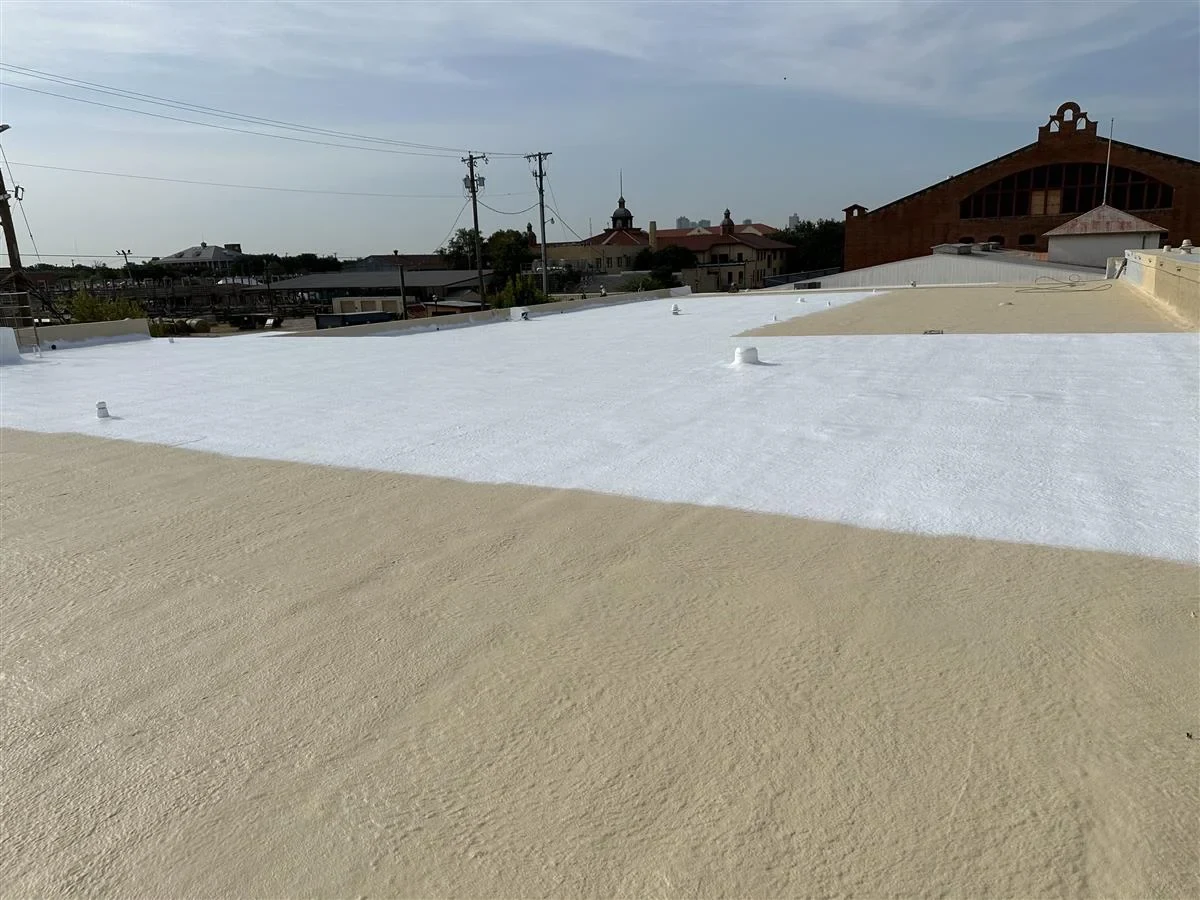
Spray polyurethane foam, or SPF, solves a different problem than membrane roofing. It's a continuous, self-flashing insulation layer sprayed directly onto the deck, which makes it a strong fit for Lincoln buildings with complicated rooftops full of curbs, pipes, and irregular penetrations, especially on university lab buildings and older manufacturing plants.
The Best Insulation Value Per Inch
SPF delivers a higher R-value per inch of thickness than almost any other roofing insulation option, which matters on buildings where roof height, structural loading, or existing curb heights limit how thick a conventional insulation-plus-membrane assembly can go. On a university lab building with dense mechanical penetrations, that per-inch efficiency often makes SPF the only practical way to hit a real energy performance improvement without raising every curb and unit on the roof.
Because the foam is sprayed rather than laid in boards, it also fills low spots as part of the application, which can correct minor drainage issues that a board-insulation retrofit would leave unaddressed.
Self-Flashing Application Around Penetrations
The spray application flows around pipes, conduit, and equipment curbs and self-flashes as it cures, eliminating the seam and flashing detail work that a membrane installer would need at every one of those penetrations. On roofs with dozens of individual penetrations, that difference in labor and long-term leak risk is significant.
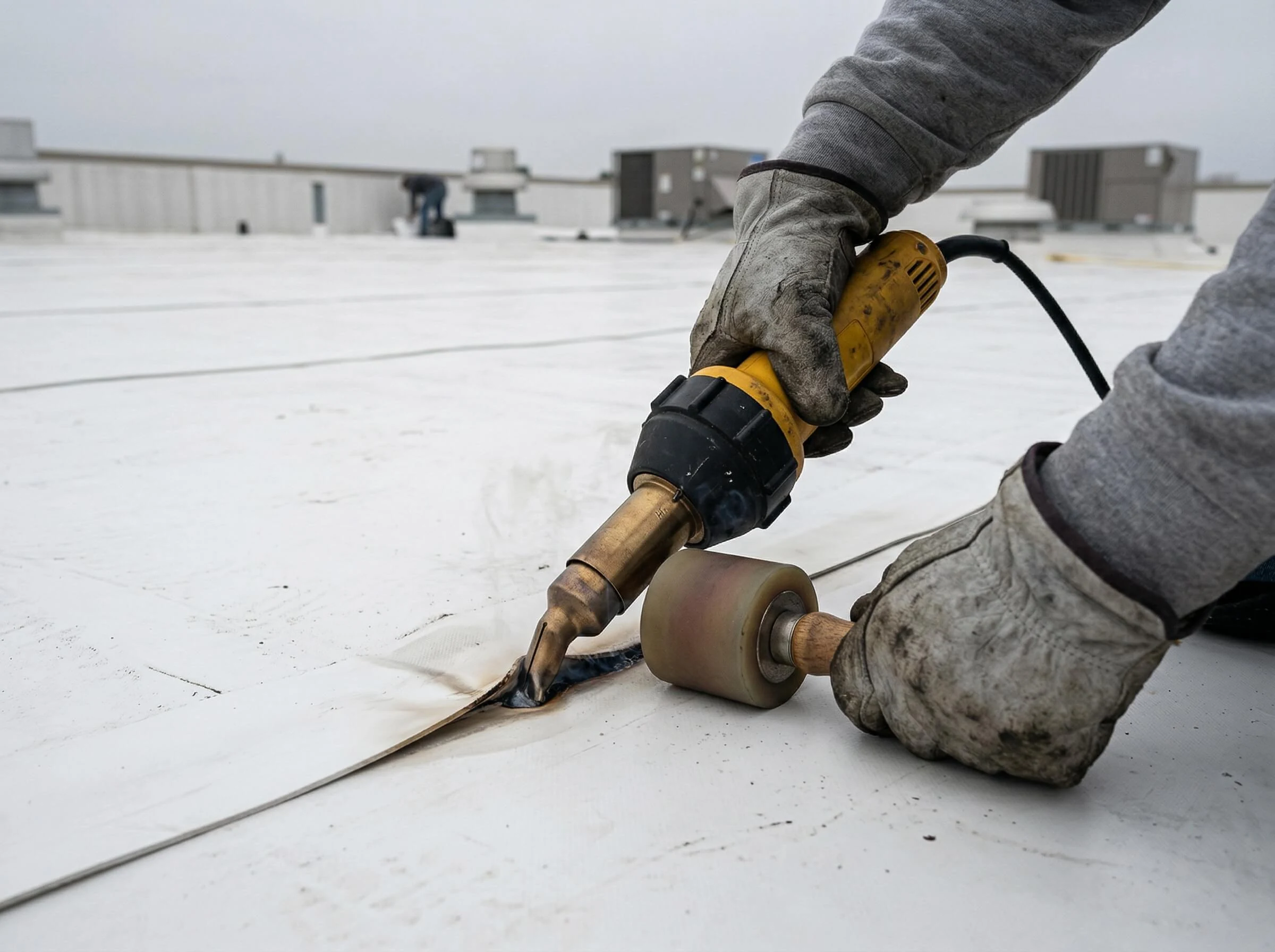
The trade-off is that SPF needs a protective coating over the cured foam, since bare foam degrades under UV and foot traffic. We never leave foam uncoated, and we build the coating thickness into every SPF proposal rather than treating it as an optional add-on.
Reflectivity Through the Protective Coating
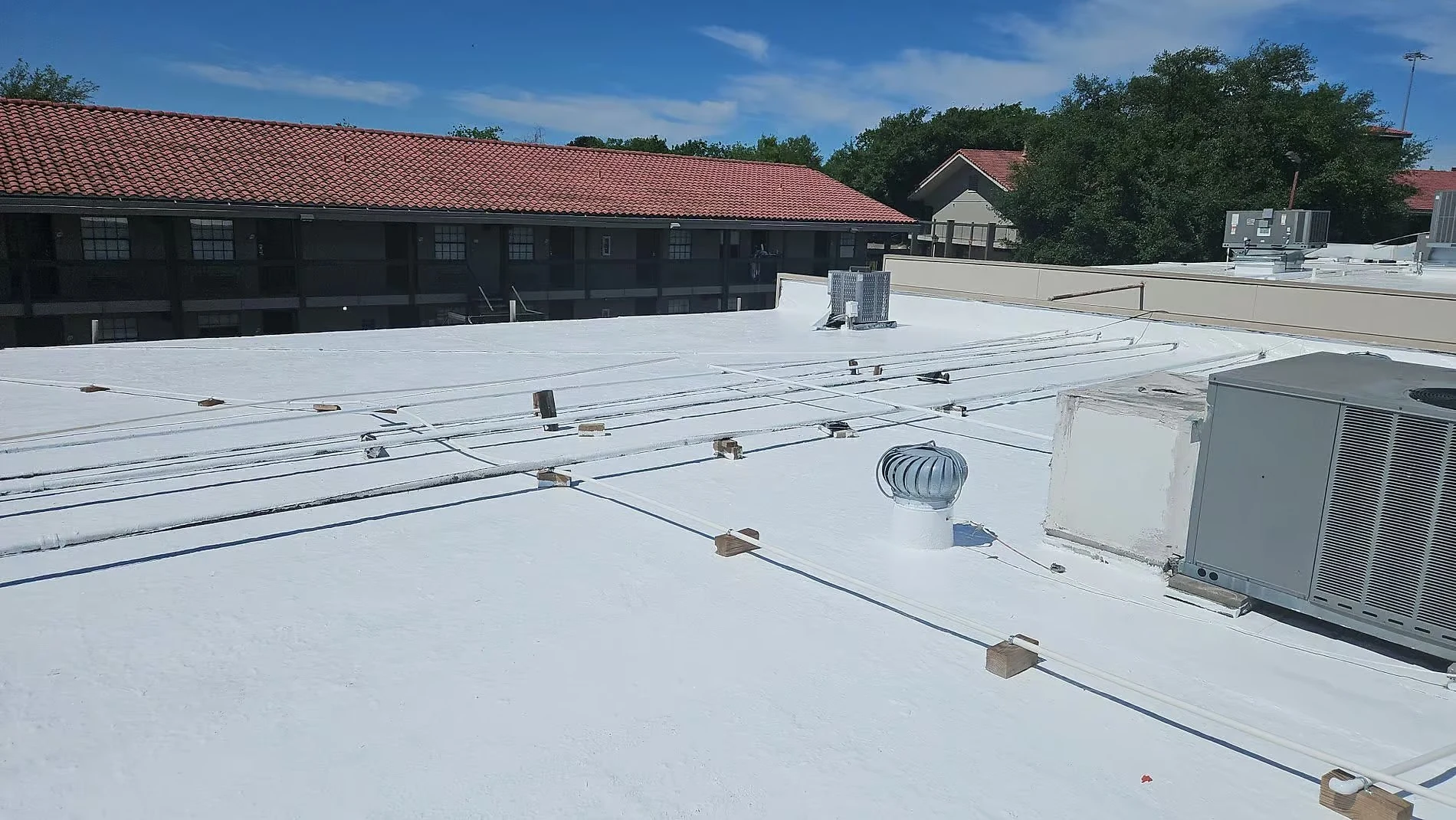
The elastomeric or silicone coating applied over SPF is where reflectivity comes from, and a white coated foam roof reaches reflectivity figures comparable to a white single-ply membrane. Combined with the foam's insulation value underneath, a properly coated SPF roof gives a Lincoln building both a high R-value assembly and a reflective surface, which is a combination that's harder to achieve with board insulation and single-ply membrane at the same total roof thickness.
Recoat cycles maintain that reflectivity and UV protection over the roof's life, and we schedule recoat timing based on coating wear observed during regular inspections rather than a fixed calendar interval alone.
Hail Exposure and the Coating's Role
- Foam itself can dent or crack under large hail impact without adequate coating thickness
- Granulated or aggregate-reinforced coatings improve impact resistance on hail-prone sites
- Post-storm inspection after any significant Lincoln hail event is standard on SPF roofs
- Small hail dings in the coating layer are repairable without a full recoat
- Coating thickness matters as much as foam thickness for long-term impact durability
Where SPF Fits Best in Lincoln
University buildings and older manufacturing plants with dense, irregular rooftop equipment are our strongest SPF candidates, along with any building where raising the insulation value without raising every roof curb is the priority. It's a less common fit for simple, open warehouse roofs where a straightforward single-ply system covers the same square footage faster and at lower upfront cost.
SPF also works well as a re-cover over an existing roof in reasonable condition, since it adds insulation value and a new weatherproof surface without a full tear-off in many cases.
Application Conditions and Weather Windows
Spray foam application is more weather-sensitive than membrane installation, since wind, moisture, and temperature all affect how the foam expands and cures. We watch Lincoln's spring forecast closely when scheduling SPF projects, since wind carries overspray and rain during application ruins the foam's cell structure before it fully cures.
That sensitivity means SPF projects sometimes run on a tighter weather window than a comparable membrane job, and we build schedule flexibility into the project timeline rather than promising a fixed install date regardless of conditions.
Long-Term Coating Maintenance Cycle
The protective coating over SPF wears gradually from UV exposure and foot traffic, and recoating on a planned cycle is what keeps the underlying foam protected for its full service life. We track coating thickness during regular inspections and flag when a recoat should move up the schedule based on actual wear rather than a generic interval that doesn't account for a specific roof's sun exposure or traffic pattern.
Skipping a recoat cycle is the most common way an otherwise well-installed SPF roof gets into trouble, since exposed foam degrades faster once the coating layer thins past its protective threshold.
Noise and Odor During Application
SPF application involves spray equipment noise and some chemical odor during the active spraying phase, which matters for scheduling around occupied university buildings with classes in session or manufacturing floors running normal operations. We coordinate application timing with building management to minimize disruption, and odor typically clears within a short period after the foam cures.
Common Questions on Spray Foam Roofing
Does spray foam roofing need to be recoated?
Yes, on a recurring cycle. The coating protects the foam from UV and physical damage, and recoating maintains that protection along with reflectivity.
Is SPF a good fit for a flat warehouse roof?
It can work, but the labor-saving benefit around penetrations matters less on an open roof, so a single-ply membrane is often more cost-effective there.
How does SPF handle Lincoln's hail?
Impact resistance comes from the coating thickness and reinforcement, so we spec accordingly on any site with meaningful hail exposure.
Can SPF go over an existing membrane roof?
Often yes if the substrate is dry and stable, which we confirm with a moisture survey before proposing an SPF re-cover.
What R-value does SPF add compared to board insulation?
SPF generally delivers a higher R-value per inch than standard polyiso board, letting it hit a target insulation level in less overall thickness.